
How to hide a specific page in the Windows Settings app
Don't want people adjusting your settings on Windows? Here's how to hide the entire page in the Settings window.
Windows allows you to restrict access to certain parts of the operating system. You can even hide pages in the Settings app to prevent other users from making unnecessary changes.
Therefore, if you want to prevent people from scoffing at your system settings, here's how to hide selected pages in Windows.
recommend:Disable or enable virtual memory file encryption in Windows 11
How to hide the Windows Settings page in the Group Policy Editor
The Group Policy Editor is an administrative tool that allows you to control your Windows working environment for user and computer accounts. It is not typically available on Windows Home, but there is a way to access the Group Policy Editor within Windows Home.
- Open Windows Search and type editor Locate the Group Policy Editor. You do not need to select to run it as administrator.
- In the Local Group Policy Editor pane, navigate to Computer Configuration > Administrative Templates > Control Panel.
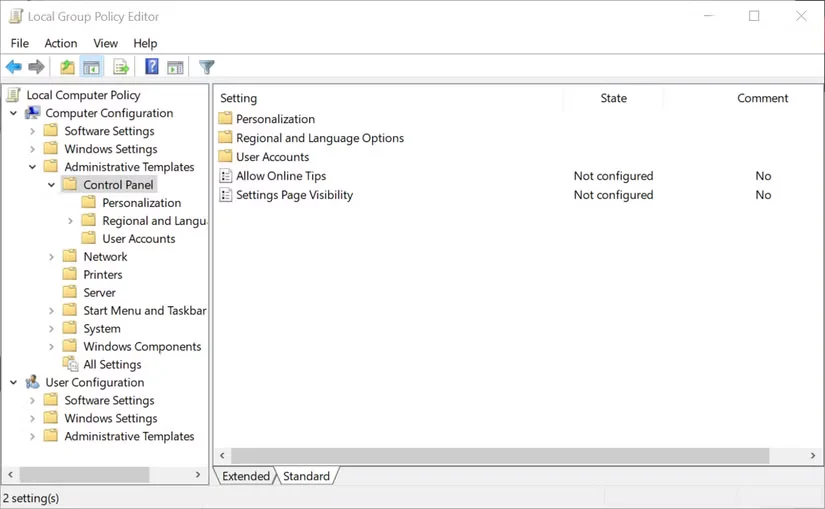
How to hide the Windows Settings page in the Group Policy Editor
- In the right pane, double-click Set page visibility.
- Set from Not configured to Enable.
- In the options section of the pane, type hide: Followed by the name of the setting page, using the URI tag. For example, Hide: Login options.
- You don't need to enter. hide: For each page you want to hide, instead of combining multiple commands into one, you can use that command. For example... hide:storagesense;signinoptions.
- If you need to hide most of the settings page, use Only display: Command. Here is an example. showonly:network-wifi;language.
- After adding all the pages you want to hide, click [here]. Apply button.
If the Settings app is open when you apply these steps, you'll need to close and reopen it to see the changes. You cannot use this method to hide entire sections of settings, such as the Accounts section. You can only hide individual pages.
To display the settings page, change the settings page visibility setting back to not configured.
recommend:How to fix Windows 11 excessive battery drain?
How to hide the Windows Settings page using the Registry Editor
Another way to hide the settings page is through the Registry Editor:
- Open Windows Search and type Registry Editor Then click Registry Editor.
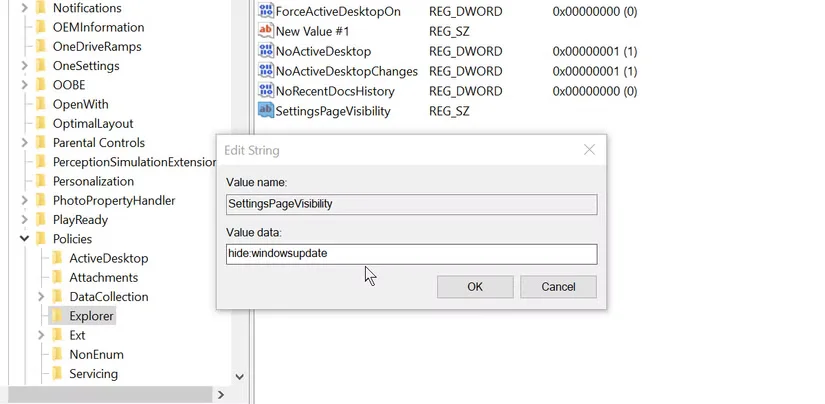
- In the Registry Editor, navigate to HKEY_LOCAL_MACHINE\SOFTWARE\Microsoft\Windows\CurrentVersion\Policies\Explorer.
- Right-click File Explorer key And select New > String ValueName a new value Set page visibility And click OK.
- Double-click the new SettingsPageVisibility button, and then... Value Data Field, type hide: The page to be hidden is next. For example, Hide: Windows Update.
- You can combine pages into a single string to hide multiple pages, for example, Hide: Windows Update; Network - Wi-Fi.
- To hide most settings, you can use... Only display: It is a command. For example, showonly:network-wifi;windowsupdate.
- After adding all the settings you want to hide, click OK Then close the Registry Editor.
Close and reopen the Settings app to see the changes you just made. As before, you cannot hide the main settings categories, only the individual pages.
To revert the changes to the Settings app, delete the newly created SettingsPageVisibility key. You will see a warning stating that deleting registry entries may affect how your computer works, but this is not a problem in this case. If you are unsure, please learn more about how to edit the registry.
Where can I find the system name in Windows settings?
To hide settings pages using any of the methods described above, you need to know how the system references these pages. Unfortunately, the content that calls these pages is not always obvious. For example, the URI for the "Windows Update" page is... Windows UpdateHowever, the URI for "Setting up a self-service terminal" is... Assign access.
Fortunately, you can find a complete list of settings page reference names on Microsoft Docs. When viewing this list of URIs, you only need the second part, after ms-settings.
Hide specific settings pages in Windows
There are more features to hide specific settings pages in Windows than you might think. The most useful aspect of hiding specific pages in the Windows Settings app, as described above, is preventing other computer users from making changes that could affect the performance of Windows. If a page is not visible in Settings, changing those settings becomes much more difficult for the average Windows user.
recommend:How to hide products in Shopify
What are the main methods for hiding the Windows Settings page?
The article describes two main methods for hiding specific Windows Settings pages:
Use the Local Group Policy Editor (GPO)
Use the Registry EditorDoes the Group Policy Editor work on all Windows versions?
The Group Policy Editor (GPO) is typically found in... Windows Home Edition It is not available by default, but it is available in Windows Pro, Enterprise, and Education versions.
Can I hide the entire main category (e.g., "Account") in the settings?
Can't. Whether you use the Group Policy Editor or the Registry Editor, youCannot be hiddenYou can only hide a single page within a section or main category (such as "Accounts").
How to hide multiple settings pages in a single command?
You can use in the commandsemicolon (
;Use the ) tag to separate the URI of the settings page you want to hide.
Example (hidden):hide:storagesense;signinoptions
Example (shown only):showonly:network-wifi;languageWhere can I find the correct "System Name" (URI tag) on the settings page?
It is possible Microsoft Docs Find the complete list of tags for setting the page URI. You only need to use the second part of that list, which is...
ms-settings:The name after

 Chinese (China)
  English
  Chinese (Taiwan)
  Russian
  Japanese